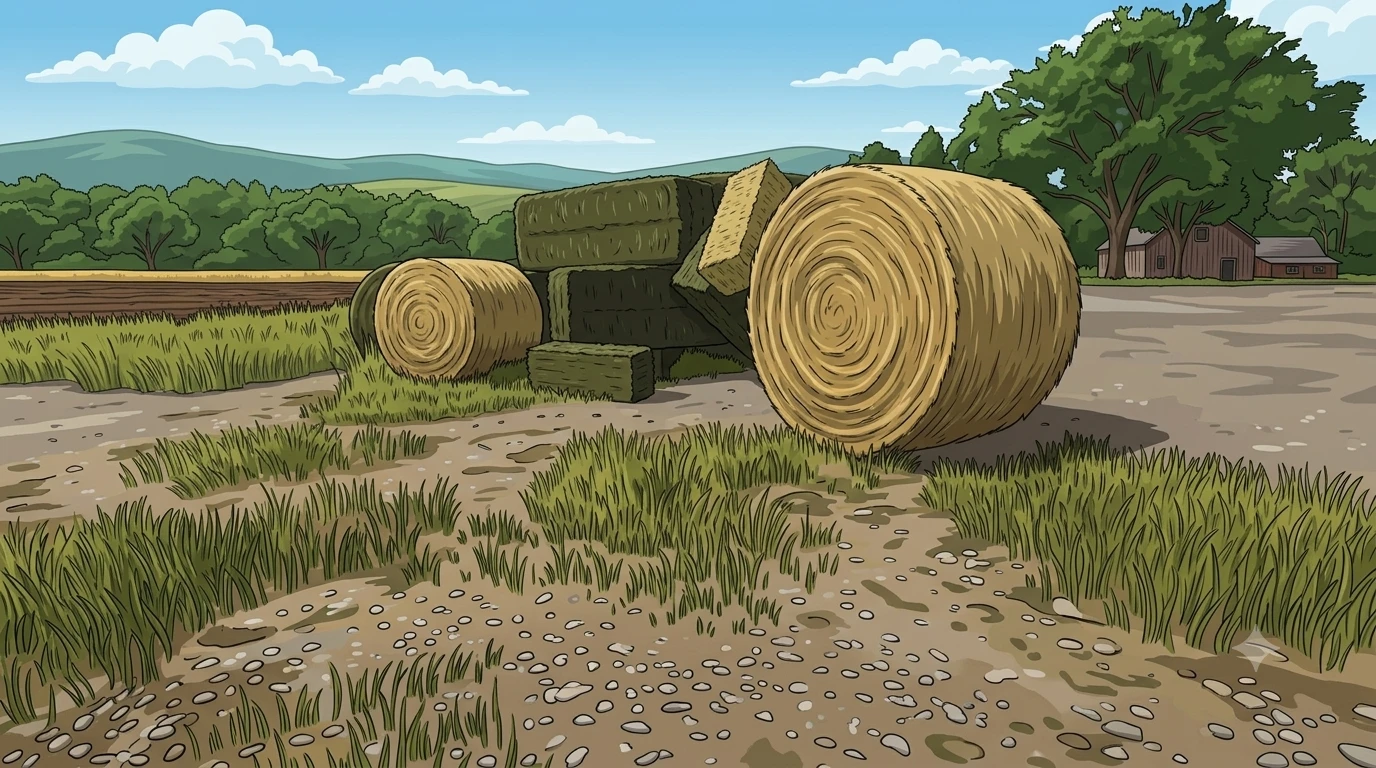
Baling is one of the most efficient and practical ways to harvest, transport, and store resources in Farming Simulator 25. Whether you are collecting straw after a grain harvest, preparing hay for livestock, or fermenting silage, choosing the right bale format and size will significantly streamline your farm operations.
The game features three main categories of bales: round bales, small square bales, and big square bales. Each type is tailored to specific equipment, farm sizes, and handling requirements.
1. Round Bales
Round bales are a classic, versatile choice for many farmers. They are ideal for basic material collection and can also be wrapped in stretch film to produce high-value silage.
The main advantage of round bales is their compatibility with specialized bale wrappers and the lower power requirements of entry-level round balers. This category includes three standard diameter sizes.
Note: Not all silage wrappers support the largest round bale diameter. If you plan to produce silage, always check the wrapper specifications in the in-game shop before buying.
2. Small Square Bales
Small square bales are a compact format ideal for beginners, small-scale farming operations, or setups running on a budget without heavy lifting machinery.
These bales are easy to handle manually or load using lightweight bale collectors. They are perfect for quickly supplying livestock with hay or straw without needing heavy front loaders. This category is available in one fixed size.
3. Big Square Bales
Big square bales are built for high-capacity, large-scale farming. Thanks to their flat sides, they stack efficiently, remain stable during transport, and maximize the loading space on trailers and flatbeds.
Big square bales come in three different length options. They drastically save time during field cleanup, as most automatic loading wagons and transport trailers are optimized for these exact dimensions.
Baling Materials
Depending on your crop type and field operations, you can produce the following types of bales in FS25:
- Straw: Created from the residue left behind after harvesting wheat, barley, oats, or canola. Used as animal bedding or sold for profit.
- Haygrass: Obtained by mowing green grass and turning it with a tedder to dry. Essential for feeding cows and horses.
- Grass: Baled directly after mowing for quick transport or wrapping.
- Silage: Produced by wrapping fresh grass bales in airtight film, allowing them to ferment over time into high-nutrient feed.
Bale Capacity & Weight Specifications
Below is the complete reference chart detailing the exact capacities and weights for every bale size across all material types:
Round Bales
| Material | 125 cm | 150 cm | 180 cm |
|---|---|---|---|
| Grass | 3500 l / 620 kg | 5500 l / 890 kg | 7500 l / 1300 kg |
| Haygrass | 4500 l / 235 kg | 6500 l / 340 kg | 9000 l / 490 kg |
| Straw | 5000 l / 220 kg | 7500 l / 320 kg | 11000 l / 460 kg |
| Silage | 3500 l / 620 kg | 5500 l / 890 kg | 7500 l / 1300 kg |
Small Square Bales
| Material | 120 cm |
|---|---|
| Grass | 500 l / 81 kg |
| Haygrass | 600 l / 35 kg |
| Straw | 700 l / 32 kg |
| Silage | — |
Big Square Bales
| Material | 180 cm | 220 cm | 240 cm |
|---|---|---|---|
| Grass | 5000 l / 815 kg | 6000 l / 1000 kg | 6500 l / 1100 kg |
| Haygrass | 6000 l / 350 kg | 7250 l / 426 kg | 8000 l / 465 kg |
| Straw | 7000 l / 320 kg | 8250 l / 400 kg | 9000 l / 430 kg |
| Silage | 5000 l / 815 kg | 6000 l / 1000 kg | 6500 l / 1100 kg |


